by Tucker Koch, Contributing Writer
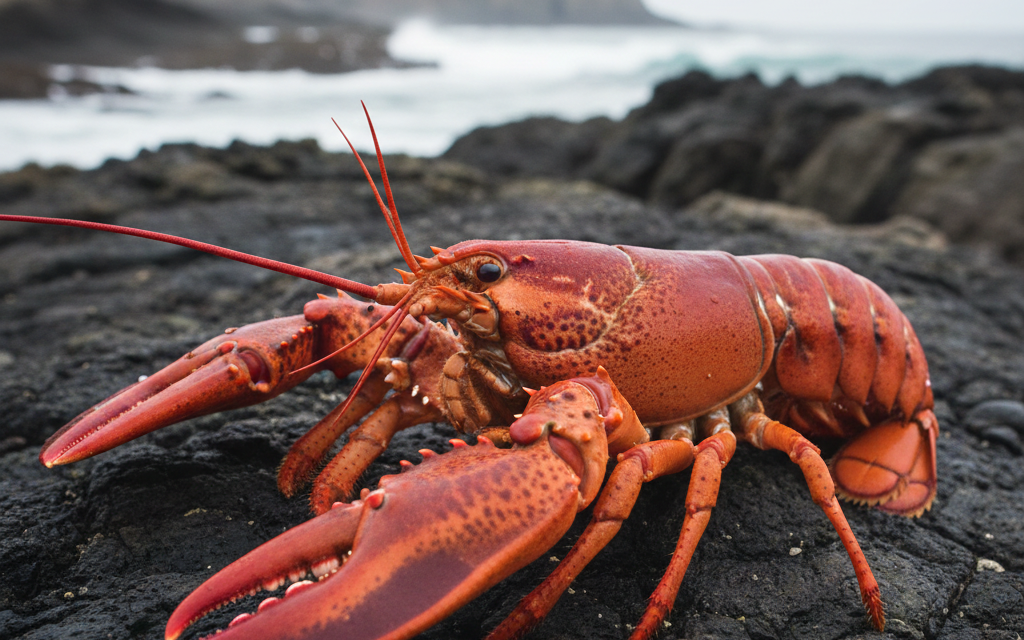
The Cold War was truly something else, man. Everything was so binary when people look back on it; You were either with the communists or the democracies. However, that was not the case. There were plenty of pointless feuds during this time that had nothing to do with ideology, one of which was the Lobster War. Now, with a name like that, you’d think I’d either be talking about some cartoon episode or like a bar fight at a Red Lobster, but this was an actual thing that occurred in the 1960s.
France was on a losing streak after War World II. They had lost their status as a world power for the most part due to the loss of most of their colonies. One of these colonies was Mauritania, from which France got most of its lobster. Now, you see, the French people still wanted lobster, and France no longer had a steady supply of it. What would France do to get more lobster? Consider trading for it with the newly formed Mauritanian government. How about stealing them from Brazil? Let me explain.
France sent over a couple of diplomats to Brazil to negotiate a deal. They would send three vessels to “research lobster nurseries”. They eventually got the go-ahead in March of 1961, and it was not long before the Brazilian government caught on. Brazil sent Navy representatives aboard the boats for inspection and found not only that no research was being conducted on them, but also that France had brought four ships instead of 3. Infuriated, the Brazilian government forced France to leave its waters immediately.
France, still high off its rocker from being a significant power for the last couple of centuries, decided to ignore the Brazilian government and continue fishing completely. Reasonably, the Brazilians weren’t too keen on this. As such, they sent out the Navy to seize the French boat illegally fishing in their waters. They were later sent back to France with not a single lobster.
The French fisherman, unwilling to admit defeat, asked the French government for aid. The French government approved of the assistance and sent three destroyers, five frigates, a cruiser, a tanker, a dispatch boat, and an aircraft carrier to escort the fishermen. Keep in mind, this is in the middle of the Vietnam War, and they can afford to send military vessels out to protect their lobster supply. Upon hearing about the French boats, Brazil immediately readied its Navy and Air Force for retaliation in the event of an attack.
When the two navies met at sea, there was a standstill for a moment before the United States destroyer, the Paraná, broke up the feud. The fight was not over yet, as it soon turned into a legal battle between France and Brazil over what a lobster is classified as: whether it is more like a fish or an oyster.
The reason they were having this argument was that if lobsters were like fish, then the French could legally fish for them just outside Brazil’s economic zone. At the same time, Brazil argued they were more like oysters, so that they belonged to the much larger Brazilian continental shelf. The court eventually agreed that lobsters are more like oysters based on one line from the Brazilian representative. You see, the French argued that lobsters were like fish because they could swim in the water. Brazil then argued that lobsters are like fish because they hop in the water, and that a kangaroo is like a bird because it hops in the air. Safe to say, Brazil won that legal battle.
Anyways, this has been Tucker Koch, and I hope you enjoyed reading this.