by Tucker Koch, Contributing Writer
Australia usually isn’t at the forefront of people’s minds when it comes to wartime affairs. While they have taken part in quite a few wars, their involvement is usually overshadowed by other nations’. Similar to that of Canada, actually. However, there was a war in which Australia was involved that I am intrigued to discuss. A war that was exclusively fought on Australian soil. A war that was certainly for the birds. This is the Emu War.
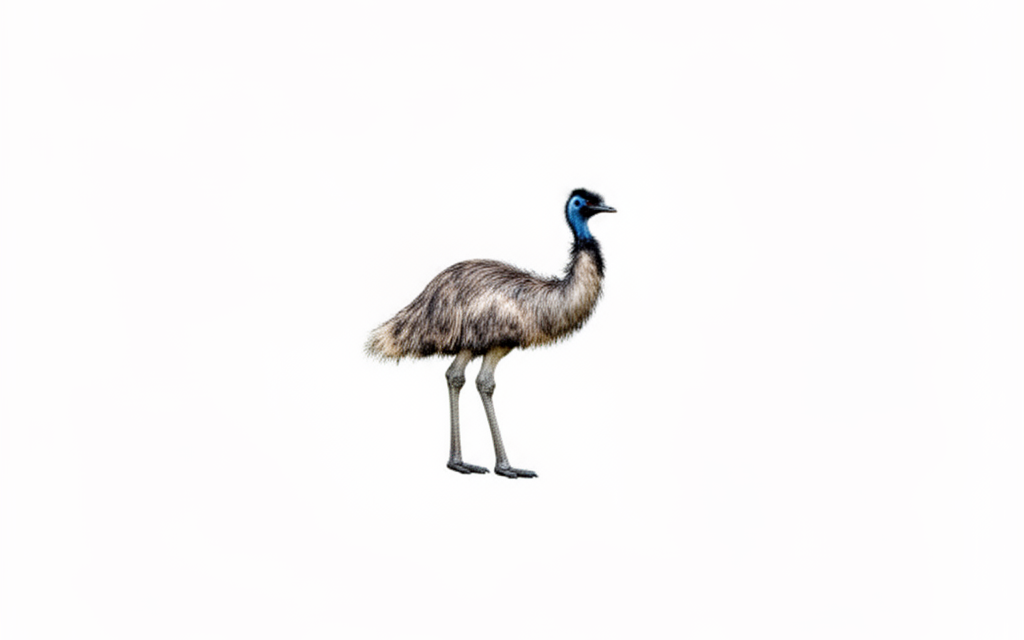
Now, for those of you who didn’t grow up watching educational shows on public access television, an emu is a large, flightless bird that is native to Australia. Surprisingly, one of its closest blood relatives is the kiwi. The tiny national bird of New Zealand, not the fruit. Don’t mistake the ostrich as small, however, as this beast of a bird can reach up to 150-190 cm in height alone (or about 5-6 feet).
You may be wondering after that, why on earth did the Australian government declare war on a species of birds out of all things? That is a very good question. You see, it’s the 1930s, and the Great Depression is sweeping the world. The Australian government promised its farmers that, if they grew grains like wheat, they would get a bit of bonus cash. Because of this overabundance of wheat, prices began to fall sharply. Not to mention, the emus would regularly migrate towards these wheat fields and decimate them, eating the wheat and making large holes in the fields. The farmers were reasonably upset by this and went to complain to the Australian government. The Australian government responded by deploying a heavy artillery company equipped with World War One light machine guns with 10,000 rounds of ammunition.
The first ambush they conducted against the Emus was on November 2nd of 1932, when the army spotted 50 Emus. Their first round of gunfire missed spectacularly, but their second round of gunfire killed, and I quote from an official source, ‘a number’ of them. Later that day, they encountered these emus again and, I quote, killed ‘perhaps a dozen’ of them. Good sir, how on earth do you not know how many birds you shot? The fighting dragged on until November 8th, when the commanding officer of this operation, Major Gwynydd Purves Wynne-Aubrey Meredith, decided to withdraw after a distinct lack of success. He then proceeds to describe the war tactics of the Emus as similar to those of the Zulus. The astute among you may realize that this guy is comparing the evasion strategies of a flightless bird to a cultural minority in Africa that the British fought. I’m just going to leave it up to the reader’s interpretation to analyze that because that is a WILD comparison.
That all aside, the farmers still weren’t happy and begged the government to do something. So, on November 12th, they resumed their efforts. This wave proved to be much more successful, this time killing hundreds of emus over the span of a month, ending at around December 10th. Despite the government’s efforts, its methods remained ineffective, and the farmer continued to complain year after year. Then they basically set up a bounty system where the government would pay people to kill emus. At the same time, the farmer soon developed the revolutionary strategy of “putting up a fence” to keep the emus out, which also worked quite well.
Historically, since the issue wasn’t resolved until after the military left, most historians consider it a loss for the Australians. I just find it really funny how any country that went to war against a bird lost. With that all being said, this has been Tucker Koch, and I hope you’ve enjoyed reading this.